Non-resident Indians and Overseas Citizens of India can buy a flat in Pune without asking the Reserve Bank of India for permission. The rules that do apply come from three places: the foreign exchange law, the RBI’s directions to banks, and the Income-tax Act. Each has a detail that catches out buyers paying from abroad.
The rules below were checked against official and published sources in November 2026. Codename Vybe’s prices have not been published, so the figures here describe the rules, not any flat.
What FEMA allows
The RBI’s Master Direction on acquiring immovable property, last updated in September 2022, says an NRI or OCI may buy any immovable property in India other than agricultural land, a plantation or a farm house. A flat in a city project is covered, and no prior RBI approval is needed. The direction sets no limit on how many flats you buy, although, as explained below, it does limit how many you can later send sale money abroad from.
How the money can reach the developer
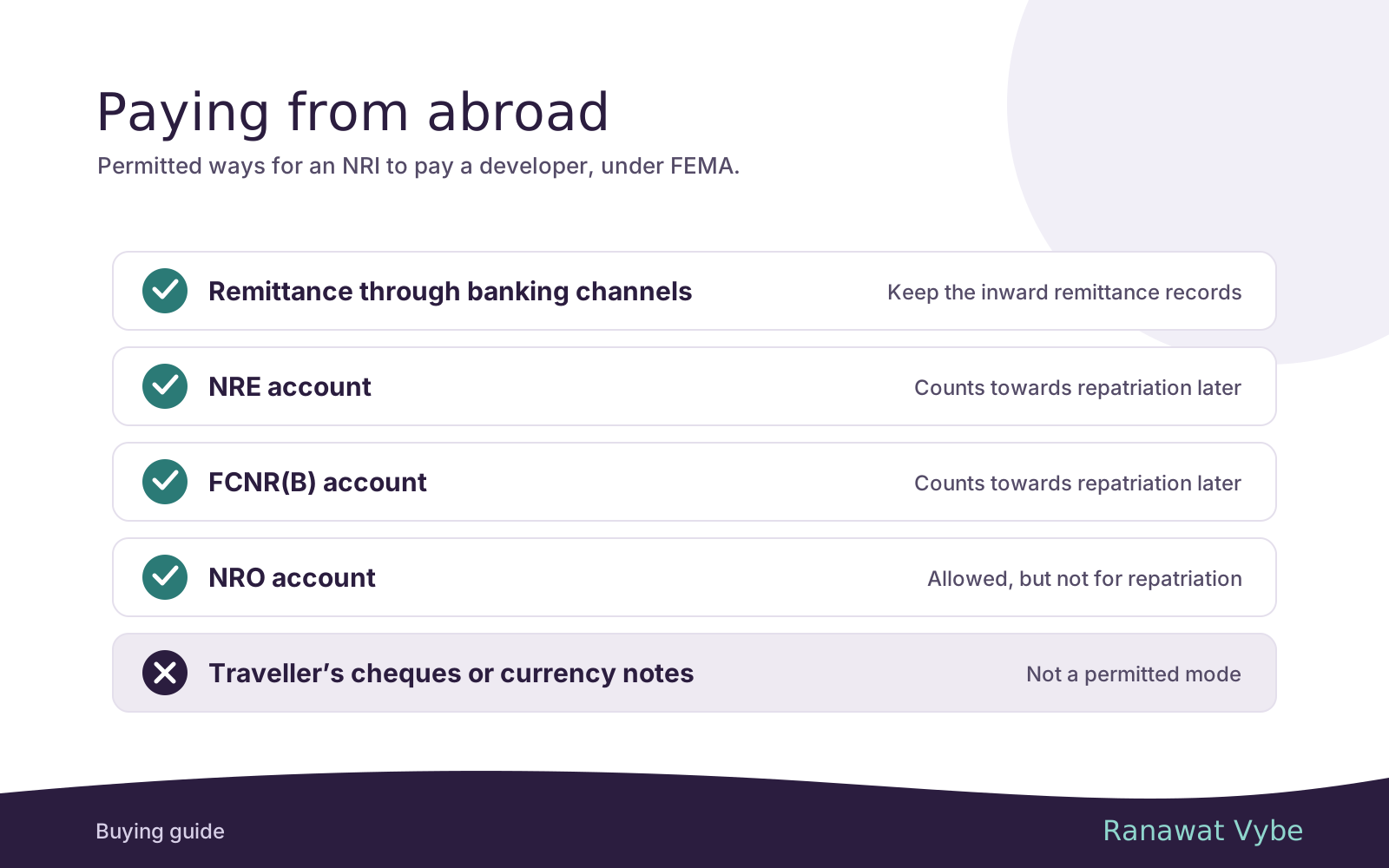
Paragraph 3.3 of the same direction is specific about payment channels:
| Paying from | Allowed? | Worth knowing |
|---|---|---|
| Money remitted to India through banking channels | Yes | Keep the bank’s inward remittance records; you will need them when you sell |
| NRE account | Yes | Counts as foreign exchange for repatriation later |
| FCNR(B) account | Yes | Counts as foreign exchange for repatriation later |
| NRO account | Yes | Allowed for the purchase, but does not qualify the flat for the repatriation route described below |
| Traveller’s cheques or foreign currency notes | No | Not a permitted mode of payment |
The account you pay from matters more when you sell than when you buy, so choose it deliberately.
Home loans for NRIs
The RBI’s Master Direction on borrowing and lending in rupees, updated in September 2026, lets banks and housing finance companies approved by the National Housing Bank lend to NRIs to buy a home in India. Its main conditions:
- the loan amount, margin and tenure follow the same terms as for a resident borrower;
- the loan cannot be credited to your NRE, FCNR(B) or NRNR account;
- it is secured by an equitable mortgage on the flat, with a lien on your other Indian assets if needed;
- repayment can come from remittances from abroad, from NRE, FCNR(B), NRO or NRSR accounts, from rent earned on the flat, or from a relative in India paying straight into the loan account.
Lenders often price NRI loans differently. HDFC Bank’s home loan page, as checked in November 2026, lists a processing fee for NRI loans of up to 1.50 per cent of the loan or ₹4,000, whichever is higher, plus taxes, against up to 0.50 per cent or ₹4,000 for salaried and self-employed professional borrowers. If you plan to let the flat, rent can service the loan, and the guide to renting out on Sinhagad Road covers that side.
Signing from abroad: the power of attorney
Few NRIs can fly in for every signature. A power of attorney lets someone you trust in Pune sign documents and appear at the sub-registrar’s office for you. Three points are worth getting right:
- Keep it specific. Name the project, the flat and the acts the attorney may perform, such as signing the agreement for sale and the loan papers. A general power over all your property is more than one purchase needs.
- Attest it the right way. How a document signed abroad must be attested depends on the country you sign in, so ask your Pune advocate what the sub-registrar will accept before you sign, not after.
- Stamp it in time. Under Section 18 of the Maharashtra Stamp Act, 1958, an instrument executed only outside the state may be stamped within three months after it is first received in the state. Send it promptly and note the date it arrives.
TDS when you buy from a resident developer
The Income-tax Act, 2025 took over from the 1961 Act on 1 April 2026. The rule that a buyer deducts tax at 1 per cent when paying ₹50 lakh or more for property bought from a resident seller, long known as Section 194-IA, now sits in Section 393(1), as TDSMAN set out in May 2026. The duty falls on the buyer, and being non-resident does not change that.
The paperwork has changed too. Taxscan reported in April 2026 that Form 141, a PAN-based challan-cum-statement, has replaced Form 26QB for property TDS on payments from 1 April 2026, with one form per buyer covering all sellers. On a flat paid for in instalments, tax is deducted on each instalment as it is paid, so allow for it in every demand letter, not only the first. All of this needs a PAN, so apply early if you do not have one.
Sending money back out
Repatriation is where your payment choices come back. Under paragraph 8.2 of the property direction, your bank may let you send sale proceeds abroad if the flat was bought under the foreign exchange rules of the time and paid for in foreign exchange through banking channels, or from an NRE or FCNR(B) account. For residential property, this route is limited to two properties. Loan instalments repaid from abroad, or from NRE or FCNR(B) accounts, count as foreign exchange paid.
Money that does not qualify, such as the proceeds of a flat bought from NRO funds, can still leave through the NRO route. The RBI’s Master Direction on remittance of assets, updated in June 2026, lets banks allow NRIs to remit up to USD one million a financial year from NRO balances and sale proceeds of assets, on documentary evidence and after applicable Indian taxes are paid. If you sell while non-resident, the buyer deducts tax under a separate provision of the new Act for non-resident sellers, so take tax advice before you list the flat.
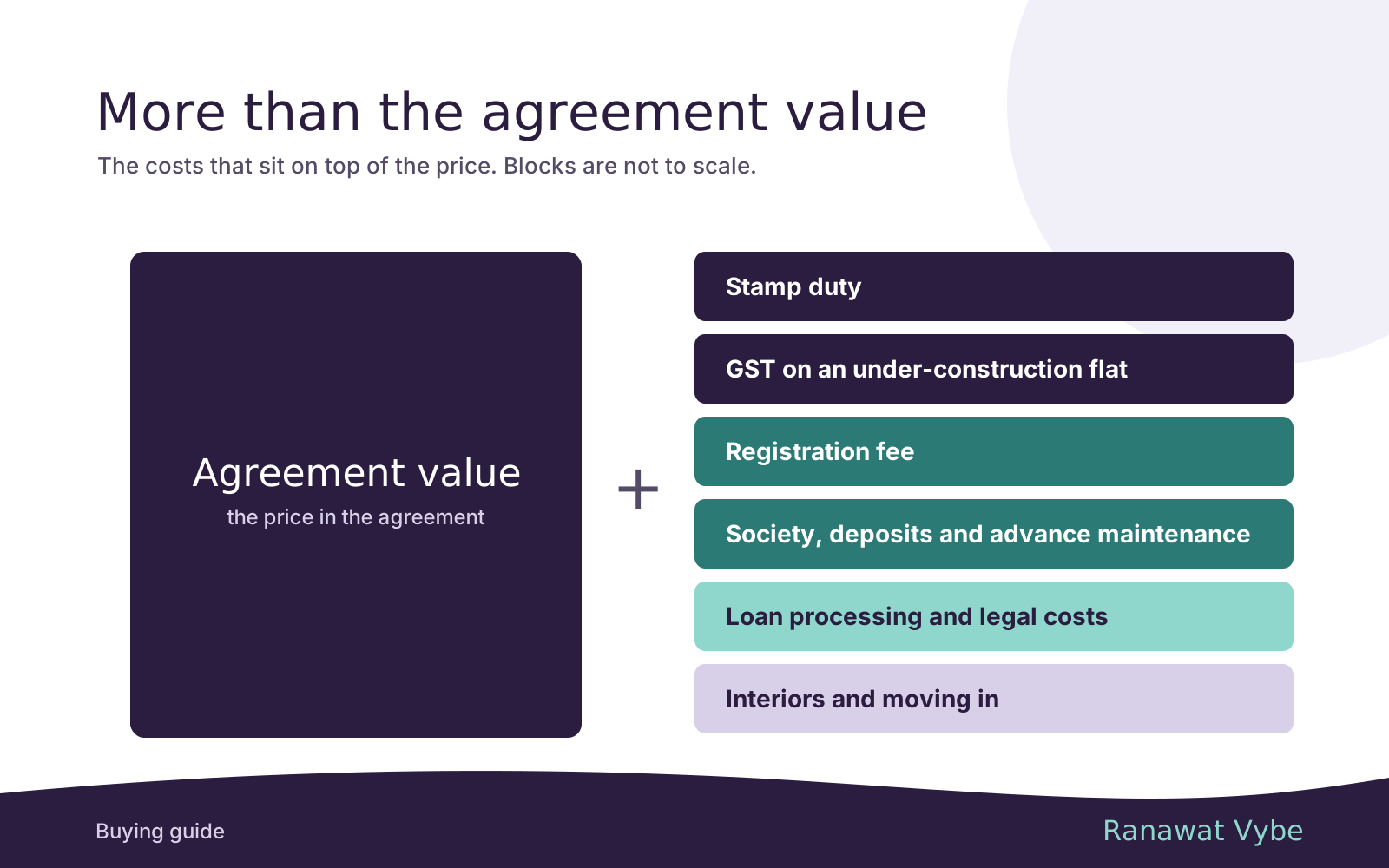
Codename Vybe has no MahaRERA registration number yet, and no amount should be paid for any project until its registration can be checked. Meanwhile, family in Pune can look over the floor plans for you, and the guide to costs beyond the price helps you work out the full outlay. This is general information checked against RBI and Income-tax sources in November 2026, not tax or legal advice, and the country you live in may add rules of its own.
If you are overseas and would like the plans and updates sent to you, the contact page has the details.